.png)
Humanities
Discover how the BDS Humanities Department builds critical thinkers with a strong sense of empathy and curiosity. Explore the subjects offered across all secondary levels.
Humanities
Introduction
The BDS Humanities Department believes that all our students have the capacity to hold the world in their hands.
In line with the school's Teaching and Learning Framework, we seek to nurture creative and critical thinkers with the skills to excel in the 21st Century world, the heart to empathise with our fellow men, and the spirit to appreciate our diverse heritage and environment.
Student Outcomes
A BDS Humanities Student will be able to acquire the following:
Skills
Think critically about various issues from different perspectives.
Critically examine and analyse different sources of information to construct clear explanations and make informed judgments.
Clearly and confidently communicate their ideas through a variety of means.
Acquire, manage and use different types of information effectively.
Knowledge
Develop an understanding of important concepts related to History, Geography and Social Studies.
Have an informed awareness about current issues relevant to Singapore, the region, and the world.
Values and Attitudes
Be able to empathise with multiple perspectives while formulating their own independent ideas.
Be able to embrace and respect diversities in modern day societies.
Be comfortable with complexity and ambiguity,and is resilient when faced with challenges.
Be appreciative of the inter-connectedness of the world around them.
Be curious about the world around them.
Be motivated to meaningfully contribute to bettering the lives of others around them.
Approach & Pedagogy
Inquiry-Based Learning approach to investigating issues
(Historical Inquiry/Geographical Inquiry/Issues Investigation)
Differentiated Teaching and Learning with banded student groups
Assessment for Learning (AfL) approach to formative assessment
Collaborative Learning
Experiential Learning through interactive, interdisciplinary Learning Journeys
Application and relevance to real-world, authentic case studies
Subjects under the Humanities Department:
Social Studies
History Elective
Geography Elective
Core Geography
Core History
Subjects Offered:
Secondary 1 Humanities Subjects (opens in new tab)
Secondary 2 Humanities Subjects (opens in new tab)
Secondary 3 Humanities Subjects (opens in new tab)
Secondary 4 Humanities Subjects (opens in new tab)
Secondary 5 Humanities Subjects (opens in new tab)
See the full version of this Google embed (opens in new tab).
Introduction
The Humanities empower students to understand an interconnected world with empathy, curiosity, and critical thinking. Guided by our vision of nurturing informed and active citizens, we develop future-ready competencies through inquiry-based learning, differentiated instruction, and Assessment for Learning (AfL).
Through collaborative learning, Learning Journeys, and authentic real-world case studies, students make meaningful connections between classroom learning and contemporary issues, equipping them to make informed and responsible decisions.
The BDS Humanities Experience
1. Student Outcomes
Students will acquire and develop the knowledge, skills, values and dispositions that will allow them to:
•Think critically by exploring issues from multiple perspectives and making informed, evidence-based judgments.
•Investigate like humanities scholars by evaluating diverse sources, constructing clear explanations, and deepening their understanding of people, places and societies.
•Communicate with confidence by managing information effectively and expressing ideas clearly through a variety of means.
2. Pedagogical Approach
Learning through Inquiry, Experiential Learning and Disciplinary Thinking to:
•Spark curiosity through authentic questions and real-world issues that encourage students to take ownership of their learning.
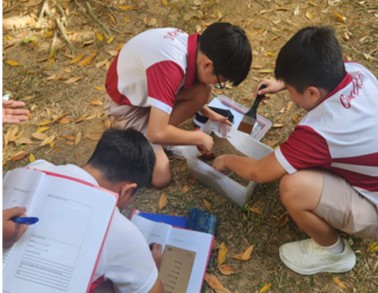
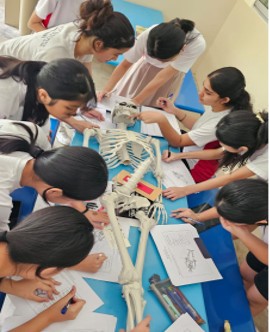
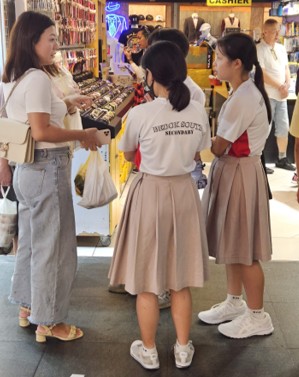
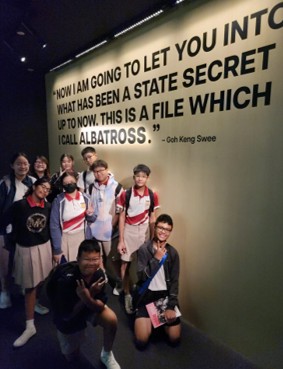
•Immerse students in meaningful learning experiences through fieldwork, museum visits, historical investigations and Structured Academic Controversy (SACs).
•Develop disciplinary thinking by applying historical concepts such as evidence, perspectives, continuity and change, and cause and consequence, alongside geographical concepts including spatial reasoning, human–environment relationships and sustainability.
•Analyse and synthesise information from diverse sources to construct evidence-based explanations and make informed decisions.
•Reflect and take action by connecting learning to contemporary issues and recognising their role as informed and responsible citizens.
3. Department Programmes and Achievements
Students' learning is enriched through authentic experiences beyond the classroom, enabling students to apply historical and geographical thinking in meaningful contexts. Students further extend their learning through competitions and programmes such as the NUS History-Geography Challenge, CPDD History Challenge, NLB Historical Scene Investigation Challenge and the Singapore Model Cabinet, developing their critical thinking, research, communication and collaboration skills.
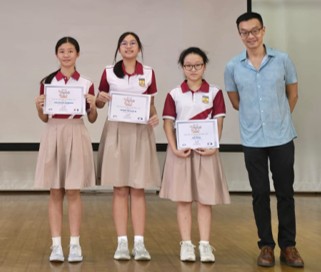
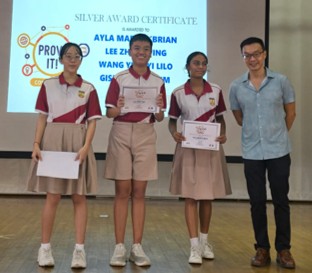
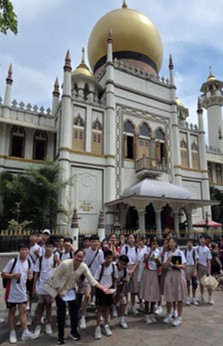
3. Department Programmes and Achievements
To enjoy learning the Humanities, encourage your child to:
•Be curious and engaged by asking thoughtful questions, participating actively in discussions and exploring different perspectives on issues.
•Think critically, not just memorise facts, by understanding the reasons behind historical events and geographical issues, analysing evidence, and making connections to the world around them.
•Read widely and practise regularly by keeping up with current affairs, analysing different sources of information, and seeking feedback from teachers to strengthen their thinking and communication skills.